The FastYoke Blog
Engineering & product notes
How the platform is built, and why. RSS

Rendering PDFs in pure Rust with typst (and why we dropped headless Chrome)
Headless Chrome for PDF generation is a heavyweight dependency and an ops liability. Rendering forms to PDF in pure Rust instead.
FastYoke Engineering · 8 min read · Aug 24, 2026
- Architecture
- Rust

State machines vs. flow DAGs: two ways to model a workflow
A DAG of steps and a finite state machine can look like the same diagram. They answer different questions. Here is when a flow tool like Windmill is the right shape, and when an FSM is.
FastYoke Engineering · 8 min read · Aug 22, 2026
- Architecture
- FSM
- Workflow

The economics of AI-cheap software: pricing when code is nearly free
If building the software costs almost nothing, what are customers actually paying for? A look at value and pricing after the code gets cheap.
FastYoke Engineering · 8 min read · Aug 21, 2026
- AI
- Pricing
- SaaS

Building a services practice around a configurable platform
Build a repeatable practice — implementation, configuration, training — around one platform.
FastYoke Engineering · 6 min read · Aug 20, 2026
- Partners
- Services
- Agency

Multi-location ops: one platform, isolated data, shared playbooks
Run twenty locations on shared workflows while keeping each one's data isolated. The multi-tenant pattern applied to your own org.
FastYoke Engineering · 8 min read · Aug 19, 2026
- Business
- Operations
- Multi-tenancy

Take payments tied to your workflow
Mint a pay link when a record reaches an awaiting-payment state, and let the payment auto-advance it to Paid.
FastYoke Engineering · 8 min read · Aug 18, 2026
- Tutorial
- Payments
- Checkout
Append-only truth: event ledgers, self-loop transitions, and the admin override
Why the event log is append-only, how self-loop transitions record "something happened," and how an out-of-band override stays auditable.
FastYoke Engineering · 8 min read · Aug 17, 2026
- Architecture
- Audit
- FSM

Small models, big leverage: what MiniLM-class models do on one VM
You do not need a frontier model to embed documents or match records. What small, on-VM models are genuinely good at.
FastYoke Engineering · 8 min read · Aug 14, 2026
- AI
- Embeddings
- On-prem

Compliance and trust as a selling point for regulated clients
For regulated clients, compliance and data sovereignty are a sales advantage — lead with them.
FastYoke Engineering · 6 min read · Aug 13, 2026
- Partners
- Compliance
- Sales

From intake form to signed document: e-signatures without the per-seal fees
A single workflow from web form to legally-binding signature — without paying per-envelope to a third-party signing service.
FastYoke Engineering · 8 min read · Aug 12, 2026
- Business
- E-signature
- Workflow

Ground an AI assistant in your records (a RAG recipe)
Ground an on-VM assistant in your own records so it answers from your data, not the internet.
FastYoke Engineering · 8 min read · Aug 11, 2026
- Tutorial
- AI
- RAG
On-VM AI, no cloud round-trip: face recognition and RAG that never leave your VM
Running detection, recognition, and retrieval on the same VM as your data — what it takes, and what you gain in latency and privacy.
FastYoke Engineering · 8 min read · Aug 10, 2026
- AI
- On-prem
- Architecture
BYO-model: why enterprises will bring their own LLM keys everywhere
Enterprises will not hand their prompts and data to yet another vendor black box. Bring-your-own-key is becoming table stakes.
FastYoke Engineering · 8 min read · Aug 7, 2026
- AI
- Enterprise
- BYOK

Co-selling and referrals: honest strategies while programs mature
Practical co-selling and referral strategies you can run today, while formal partner programs are still forming.
FastYoke Engineering · 6 min read · Aug 6, 2026
- Partners
- Sales
- Strategy
Field service, dispatch, and routing on one platform
Work orders, technician dispatch, and vehicle routing usually mean three tools. What it looks like when they share one data model.
FastYoke Engineering · 8 min read · Aug 5, 2026
- Business
- Field service
- Routing
Metering compute you can't see: pricing on-VM AI and heavy jobs fairly
When a customer runs a 30-second route solve or an AI inference on your VM, someone pays for the CPU. How to measure and price compute honestly.
FastYoke Engineering · 8 min read · Aug 3, 2026
- Architecture
- Billing
- Metering

On-prem AI is back: sovereignty, latency, and cost in the LLM era
The pendulum swings back toward running models where your data lives. The three forces — sovereignty, latency, cost — driving on-prem AI.
FastYoke Engineering · 8 min read · Jul 31, 2026
- AI
- On-prem
- Sovereignty

Churn, retention, and expansion for platform resellers
Retention and expansion are the real profit levers for platform resellers — how to work them.
FastYoke Engineering · 6 min read · Jul 30, 2026
- Partners
- Retention
- Growth

Logistics without the six-figure TMS
Shipments as state machines, a warehouse-to-transport bridge, and routing you can change yourself — logistics software without the enterprise price tag.
FastYoke Engineering · 8 min read · Jul 29, 2026
- Business
- Logistics
- Operations

Sync Gmail into your CRM (read-only recipe)
Pull Gmail threads into your CRM read-only, so context lives next to the customer record.
FastYoke Engineering · 8 min read · Jul 28, 2026
- Tutorial
- Gmail
- CRM

One JSON schema, a Rust struct, a zod validator, and a form
How one schema drives the database shape, the server validation, the client validation, and the rendered form — with no hand-written form fields.
FastYoke Engineering · 8 min read · Jul 27, 2026
- Architecture
- Schema
- Frontend

Why the next enterprise apps will be generated, not bought
Procurement optimized for a world where software was expensive to make. That world is ending; here is what replaces the buy-a-license reflex.
FastYoke Engineering · 8 min read · Jul 24, 2026
- AI
- Enterprise
- Future of software

Migrating your book of business onto a platform you resell
Moving existing clients onto a platform you resell without breaking the relationships.
FastYoke Engineering · 6 min read · Jul 23, 2026
- Partners
- Migration
- Reseller
The hidden cost of per-seat SaaS sprawl — and how to consolidate
Ten tools at $15/seat is a five-figure monthly tax you stopped noticing. A practical look at consolidating onto one configurable platform.
FastYoke Engineering · 8 min read · Jul 22, 2026
- Business
- SaaS
- Cost

Connect QuickBooks: push records on a transition
Push a record into QuickBooks automatically when it reaches a state.
FastYoke Engineering · 8 min read · Jul 21, 2026
- Tutorial
- QuickBooks
- Integrations

Three ways to run untrusted code safely: JSONLogic, WASM, and a QuickJS scripting tier
A tour of the layered sandbox: declarative predicates, a WebAssembly host with resource caps, and a scripting tier — and when to reach for each.
FastYoke Engineering · 8 min read · Jul 20, 2026
- Architecture
- Sandboxing
- WebAssembly
- Security
The end of the CRUD app as a product
If a CRUD app takes an afternoon to generate, it is no longer a product you sell — it is a feature you configure. The consequences for buyers and builders.
FastYoke Engineering · 8 min read · Jul 17, 2026
- AI
- SaaS
- Product

When you outgrow spreadsheets and Airtable
The signs your operation has outgrown a shared sheet — and what a real app platform gives you that a database-with-forms cannot.
FastYoke Engineering · 8 min read · Jul 15, 2026
- Business
- Operations
- aPaaS

Add e-signatures to a document workflow
Add a legally-binding e-signature step to a document workflow — without per-envelope fees.
FastYoke Engineering · 6 min read · Jul 14, 2026
- Tutorial
- E-signature
- Workflow

Finite state machines are the right abstraction for business software
Most business rules are really a state machine wearing a trench coat. Modeling them explicitly buys correctness, auditability, and a UI for free.
FastYoke Engineering · 8 min read · Jul 13, 2026
- Architecture
- FSM
- Workflow

Agentic software is here: what changes when apps build themselves
When software can generate and change itself, the unit of value shifts from the app to the platform that runs it safely. What that means in practice.
FastYoke Engineering · 8 min read · Jul 10, 2026
- AI
- Agentic
- Future of software

Build vs. buy vs. configure: the third option most teams miss
The build-or-buy debate skips the option that fits most operations teams: configure a platform you own. When each one wins, and how to tell.
FastYoke Engineering · 8 min read · Jul 8, 2026
- Business
- aPaaS
- Strategy

Bulk-transition hundreds of records at once
Move hundreds of records through a transition at once — safely, and with a full audit trail.
FastYoke Engineering · 6 min read · Jul 7, 2026
- Tutorial
- Bulk ops
- Workflow
Type-level multi-tenancy: making "forgot the WHERE tenant_id" impossible
Tenant isolation is too important to leave to code review. Here is how the type system refuses to compile a query that forgets its tenant scope.
FastYoke Engineering · 8 min read · Jul 6, 2026
- Architecture
- Multi-tenancy
- Rust
- Security

The seat is dying: SaaS pricing when software gets cheap to build
For twenty years enterprise software meant renting seats in someone else's database-with-business-logic. AI is making that logic cheap to generate — and the pricing model built on it is cracking.
FastYoke Engineering · 10 min read · Jul 4, 2026
- Opinion
- SaaS
- AI
- Pricing

Getting internal apps onto employee phones — without the App Store
Regulated enterprises need internal apps on employee devices — but the public App Store is the wrong path. Here's the problem, and why we built FastYoke Substrate.
FastYoke Engineering · 9 min read · Jun 20, 2026
- Mobile
- Enterprise
- Compliance
- Substrate

Sovereign git, config as code, and how we built the Vault
If a customer's data and config should truly be theirs, git is the natural substrate. We already put our source and CI on a self-hosted git server — the Vault extends that to tenant data.
FastYoke Engineering · 9 min read · Jun 6, 2026
- Sovereignty
- Git
- Audit
- Config-as-Code

Why we built our own CI — in Go
We run on a self-hosted git server and needed CI we control and can reproduce over a huge Rust build. So we built it — with a small Go gateway and a Go pipeline library. Here's why Go, not Rust, for this layer.
FastYoke Engineering · 9 min read · May 23, 2026
- Go
- CI/CD
- CI
- Sovereignty
Running your code — safely, at native speed: why FastYoke chose WebAssembly
Every FastYoke tenant runs logic we didn't write, on shared infrastructure and hardware we don't control. Here's the sandbox that makes that safe — and fast.
FastYoke Engineering · 10 min read · May 9, 2026
- WebAssembly
- Multi-tenancy
- Security
- Sovereignty

FastYoke DB: why we ship two flavors of distributed SQL
Our default is a database file per tenant. For the workloads that outgrow a single VM, FastYoke DB is our roadmap for managed distributed SQL — designed around two engine flavors, with the same app code across both.
FastYoke Engineering · 8 min read · Apr 25, 2026
- Databases
- Architecture
- SQLite
- Distributed SQL
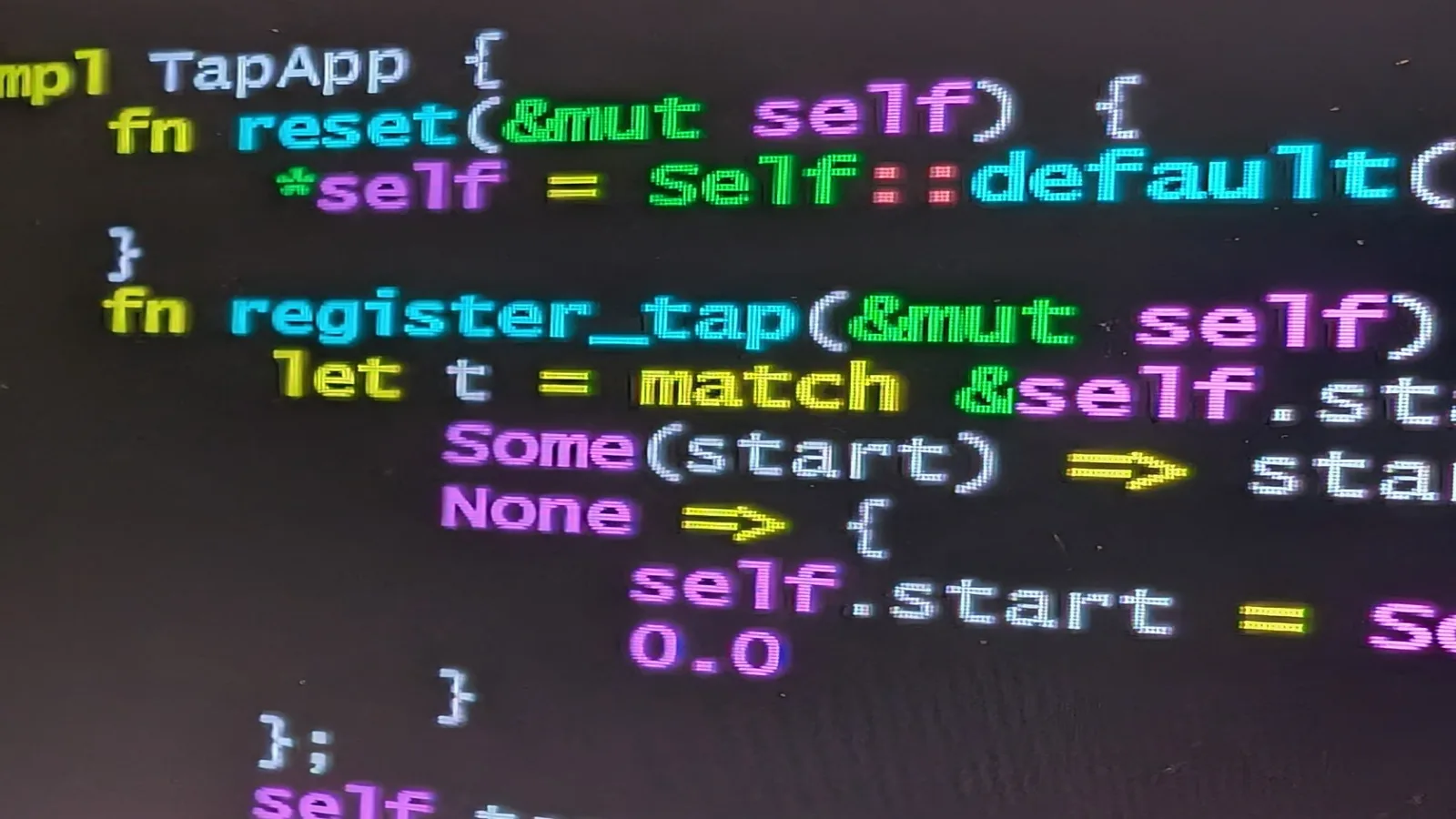
Why the FastYoke core is written in Rust
A multi-tenant engine that has to be memory-safe by construction — shipped as a single small binary that runs in the cloud, on-prem, and air-gapped. Here's why the core is Rust.
FastYoke Engineering · 9 min read · Apr 11, 2026
- Rust
- Architecture
- Multi-tenancy