Warehouse Management
Four-wall ops: receive, putaway, pick, pack, ship, cycle count. Guided scan console for each step. Soft-reservation availability so two pickers never grab the same unit.
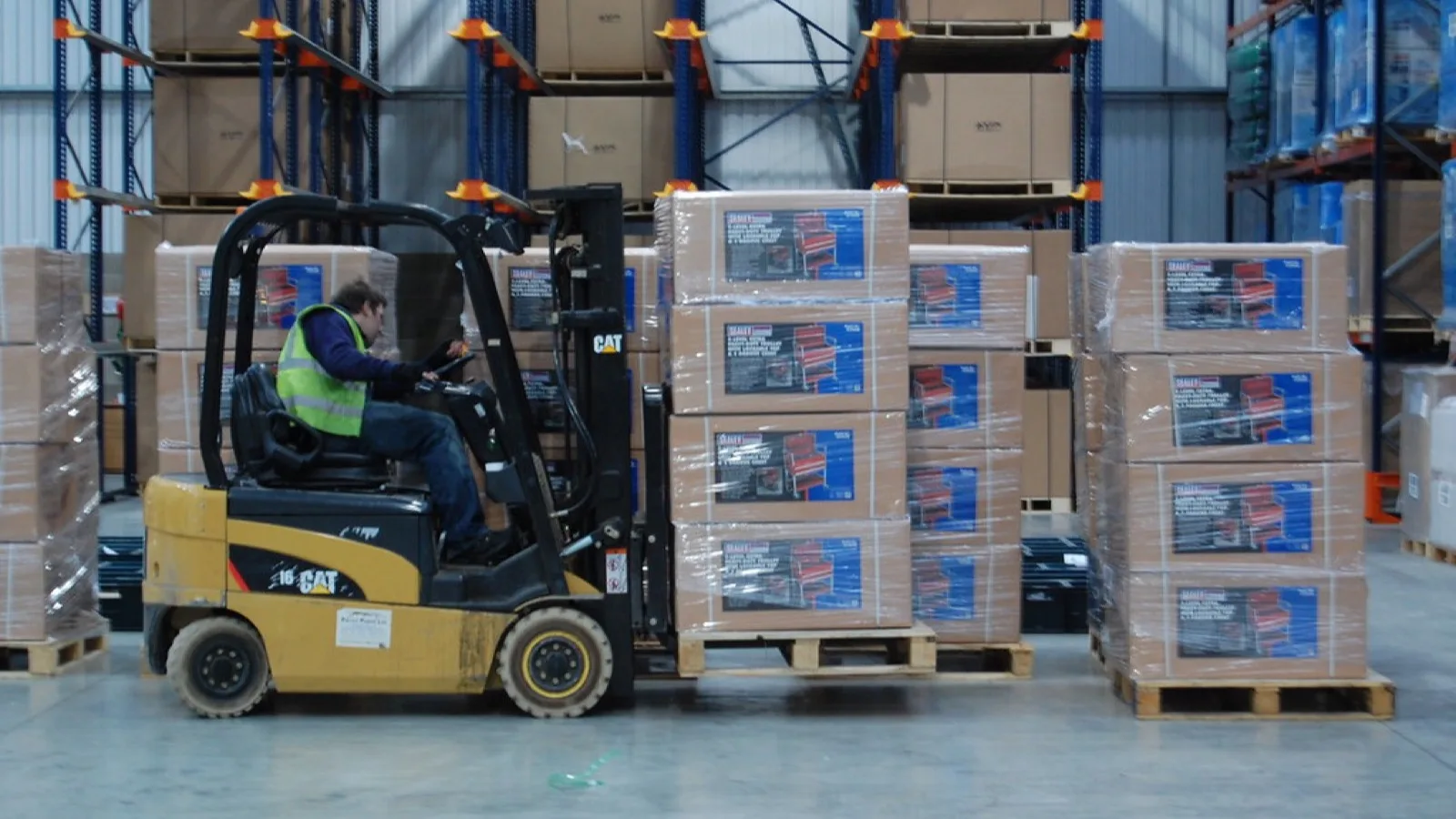
Warehousing & 3PL
Receive, putaway, pick, pack, ship — plus rating, labels, and tracking — on per-tenant databases and the free Logistics core. Built for warehouses and 3PL operators that want a unified stack across the four walls and the road.
Warehouse operators (B2B distribution, e-commerce fulfillment, food and beverage), multi-client 3PL providers, and transportation managers running 1-20 facilities. You've outgrown a spreadsheet but the enterprise WMS / TMS stack is overbuilt and overpriced for your shape. Or you're a 3PL standing up a new client and want a tenant-isolated platform that scales with the portfolio.
What ships today
The warehousing stack on FastYoke is a combination of three marketplace apps on top of the free Logistics core. Receive-to-ship, parcel and multi-carrier shipping, and multi-client 3PL billing — all running on a per-tenant database with an append-only event log.
Four-wall ops: receive, putaway, pick, pack, ship, cycle count. Guided scan console for each step. Soft-reservation availability so two pickers never grab the same unit.
Parcel and multi-carrier shipping with rating, labels, and tracking. Carrier-agnostic via the ShippingProvider trait. EasyPost / Shippo-class integrations plug in cleanly.
Multi-client warehouses on one operator tenant. Storage-snapshot + per-movement-handling billing posts directly to a draft AR invoice. Per-client audit trail and reporting.
Facilities, bins, zones, movements, immutable event log. Free with every tenant. The shared substrate every logistics app on FastYoke sits on top of.
AR / AP invoicing posted directly from movement-based billing runs. Month-end close runs against the same ledger your accountant reads.
Customer / client records linked to warehouse-client entities. Public RFP and intake forms for new client onboarding. Free Forms forever.
Extend without code
Warehouse operations always have one more wrinkle — the specific receive-tolerance policy, the client-facing reporting cadence, the SLA-driven exception handler. Most extensions don't require an engineer:
qty_on_hand − Σ reserved),
emails the client a CSV of items below their
reorder threshold. Yoke Ledger's reporting framework
handles the formatting.tpl_billing_runs table schedules
per-client billing on a configurable cadence. The
result posts directly to AR invoices in the Yoke
Ledger.When the low-code surface isn't enough — typically when you need a custom WCS / WES integration or a specialized carrier protocol — you're in customization territory.
Customize deeply
For warehouses with engineering bench (less common
mid-market, common at the enterprise scale), the
typed SDK (@fastyoke/sdk-next, @fastyoke/sdk-vue,
plus a Rust crate for the kernel) enables:
For warehouses that prefer a delivered-shape engagement:
Most warehouses engage iNetko for the first implementation phase. Once the platform is steady, the ongoing operator team takes over while iNetko stays on retainer for the harder integration work.
Honest tradeoffs
What FastYoke isn't for warehousing
If any of those is the deal-breaker — stay on Manhattan Associates or Blue Yonder. The enterprise WMS exists because the enterprise has those specific shapes. FastYoke is the right substrate when you want a unified WMS + TMS + 3PL stack at mid-market complexity without six-figure annual licensing.
Request early access — warehousing
Talk to iNetko
For procurement or compliance review packets, email security@fastyoke.io and reference warehousing in the subject line.